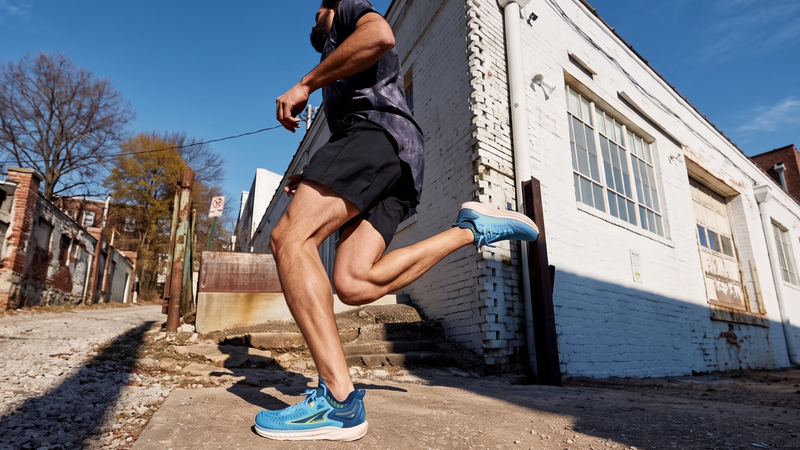
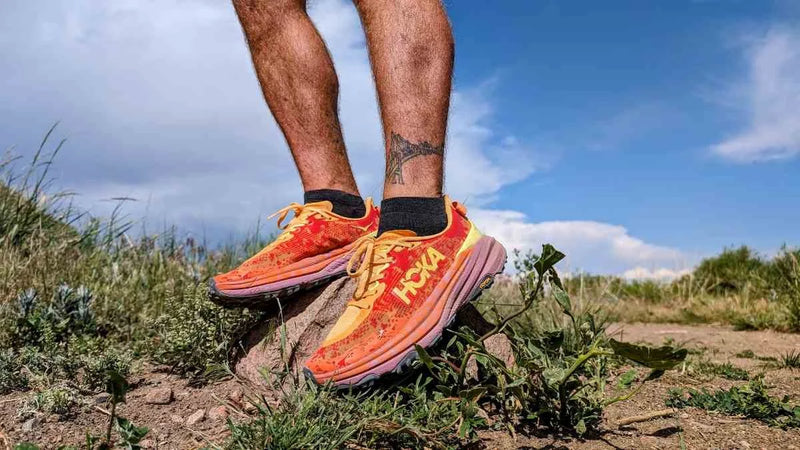
Trail shoes are not all the same shoe in different colors. But the marketing makes it hard to tell them apart. Here's the short version of how we pick at the store.
Start with your trail, not the shoe
Where do you actually run? If it's mostly greenway with a little gravel, a door-to-trail shoe like the HOKA Challenger or Brooks Cascadia wins. If it's real singletrack with roots and rocks, you want a grippier outsole and a rockplate. Speedgoat, Peregrine, Lone Peak.
Don't buy a Salomon S/Lab for a crushed limestone greenway. You'll hate it, it'll wear weird, and you'll blame the shoe.
Fit: the stuff that matters
Toe room is the first thing we check. You need a thumb's width past your longest toe when you're standing. Trail shoes get snugger as the day gets longer and your feet swell. If they're barely long enough at mile zero, they'll be painful at mile ten.
Midfoot hold matters on descents. A shoe can fit perfectly flat-footed and still let your foot slide forward going downhill. We test this on the ramp in the store. If it slides, we adjust lacing or try a different last.
What to ignore
Drop numbers, mostly. Unless you're transitioning from a very low drop to a very high drop or vice versa, the difference between a 4mm and 8mm isn't going to define your run. Stack height matters more. So does rocker shape.
Weight too. A shoe that fits right and doesn't tear up your feet will always beat a lighter shoe that doesn't. Ounces don't mean anything if you DNF at mile 20.
What to try on
Pick three shoes in your budget. Different brands if possible. Try them all. Run outside on the sidewalk. Walk the ramp. Take your time. A shoe should feel obviously right, not just fine.
If nothing feels right, that's information too. Come back another day or schedule a fit session. We have been wrong before, and we'd rather say that than sell you the wrong pair.