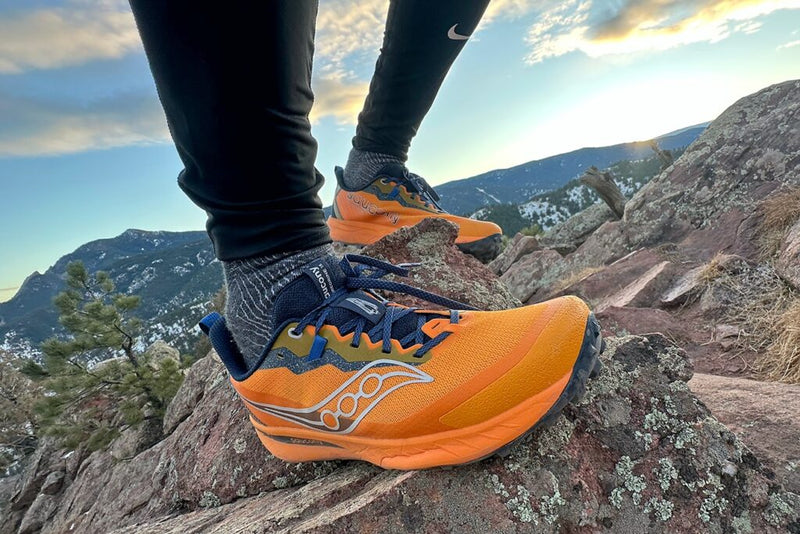
Trail running is one of the easiest ways to turn "I should get outside more" into a weekly habit. But it's also the fastest way to get frustrated if your gear is fighting you: shoes that slip on descents, a pack that bounces, a bottle you can't open with cold hands, or a "waterproof" layer that turns into a sauna.
This guide keeps it simple. Here's a practical, beginner-friendly trail running kit you can build once and trust for most conditions.
Step 1: Start with the right shoes (your kit's foundation)
Trail shoes do three things better than road shoes: they grip loose surfaces, protect your feet from rocks/roots, and keep you stable when the ground is uneven.
Pick based on your terrain
-
Hard-packed dirt + mixed pavement: lighter trail shoes, moderate lugs
-
Loose gravel + rocky trails: more protection underfoot, stable platform
-
Mud + wet leaves: deeper lugs for bite and braking
Step 2: Carry water without the bounce
If you've ever tried to run with a standard bottle in your hand or a loose backpack, you already know: bounce ruins runs. Consider getting a Nathan QuickStart as a simple way to carry hydration and essentials without overthinking your setup.
Step 3: Add a "just-in-case" layer you'll actually wear
On trails, weather changes faster than you think — especially when you're moving from sun to shade, ridgelines to valleys, or early morning to mid-day.
The Patagonia Houdini Jacket is popular for runners because it's easy to bring and easy to justify.
Step 4: Don't ignore socks (they're blister insurance)
Trail running adds friction: more climbing, more descending, more lateral movement. That means socks matter. The Smartwool PhD Run line is a strong choice for comfort and blister prevention.
Step 5: Keep your feet happy on descents (a quick fit check)
Before you buy anything new, do this quick test at home:
1. Put on your trail shoes and socks.
2. Lace up normally.
3. Walk down a set of stairs.
4. If your toes slide forward or your heel lifts a lot, adjust lacing before you size up.
A good trail fit should feel secure in the heel and midfoot while still giving your toes room to splay.
Step 6: Pack the 5 essentials (even for short runs)
Even if you're "just doing three miles," trails can turn a small issue into a long walk back. Bring:
- Water (more than you think)
- Fuel (one gel or energy waffle is enough for many beginners)
- Phone + ID - Small first-aid basics (bandage + blister care)
- Light layer (especially in shoulder seasons)
Want help dialing in your setup?
If you're not sure what works for your trails, pace, and foot shape, our team can help you build a kit that feels good from mile one without overbuying.
At Grivet Outdoors, our experienced team understands the unique needs of trail runners and outdoor enthusiasts across the Memphis and Nashville areas.
Visit any of our 8 convenient locations:
● Memphis Area - 4 locations including our flagship Cooper-Young store
● Nashville Area - 3 Bink's Outfitters locations and 1 Cumberland Transit store
Stop by any of our stores and let's start planning your next adventure!