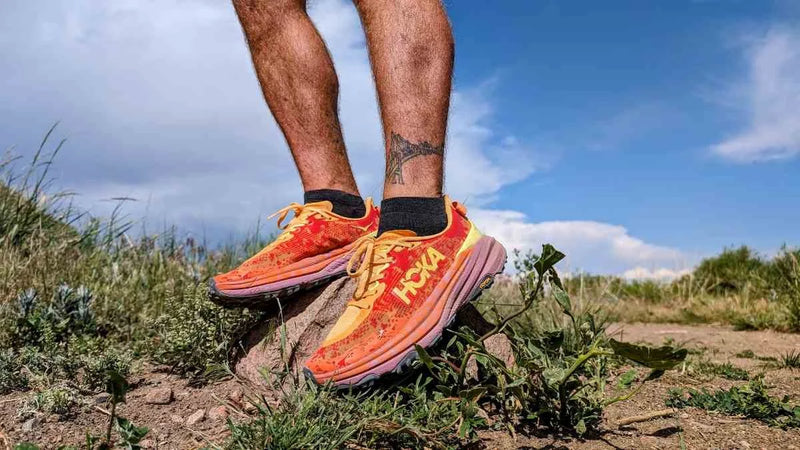
I've been testing carbon-plated trail shoes for two seasons now. Long enough to have a real opinion and not just hype.
On the road, plated shoes are a settled question. They save energy. They help most runners run faster for the same effort. Study after study says so, and every race podium proves it.
On trail, it's messier.
Where plates help
Smoother trails, runnable grades, and races where you need to hold pace for hours. Think fire roads, buffed singletrack, and efficient climbs with consistent footing. The plate rolls you forward. Your stride gets a bit longer. Your legs feel fresher at mile 25.
Ouachita 50's first and last ten miles fit this profile. A plated shoe helps there.
Where plates hurt
Technical trail. Roots. Loose rock. Anywhere you need your forefoot to wrap a rock and feel it. A carbon plate robs you of that ground feel, and your ankle takes on more of the stabilization load. I rolled my ankle twice on the Stanky Creek bluff section in a plated shoe I otherwise liked.
Steep descents also punish plated trail shoes. The stack height is usually taller, the center of gravity is higher, and you feel it in your quads and your calves. I'd rather be in a regular Speedgoat when it's nasty.
My actual rule of thumb
If I'm racing a 50K or longer on a course that's 60 percent runnable, I reach for the plate. If it's a technical 50K with a thousand feet of climb per ten miles, I go back to a non-plated shoe. Every time.
What to skip
Don't train in plated shoes every day. They wear out faster, they're expensive, and your feet get lazy. Use them on quality sessions and races. Keep a regular trainer for everything else.
If you're curious and want to try a pair on our treadmill, come by. We usually have two or three brands in stock.